
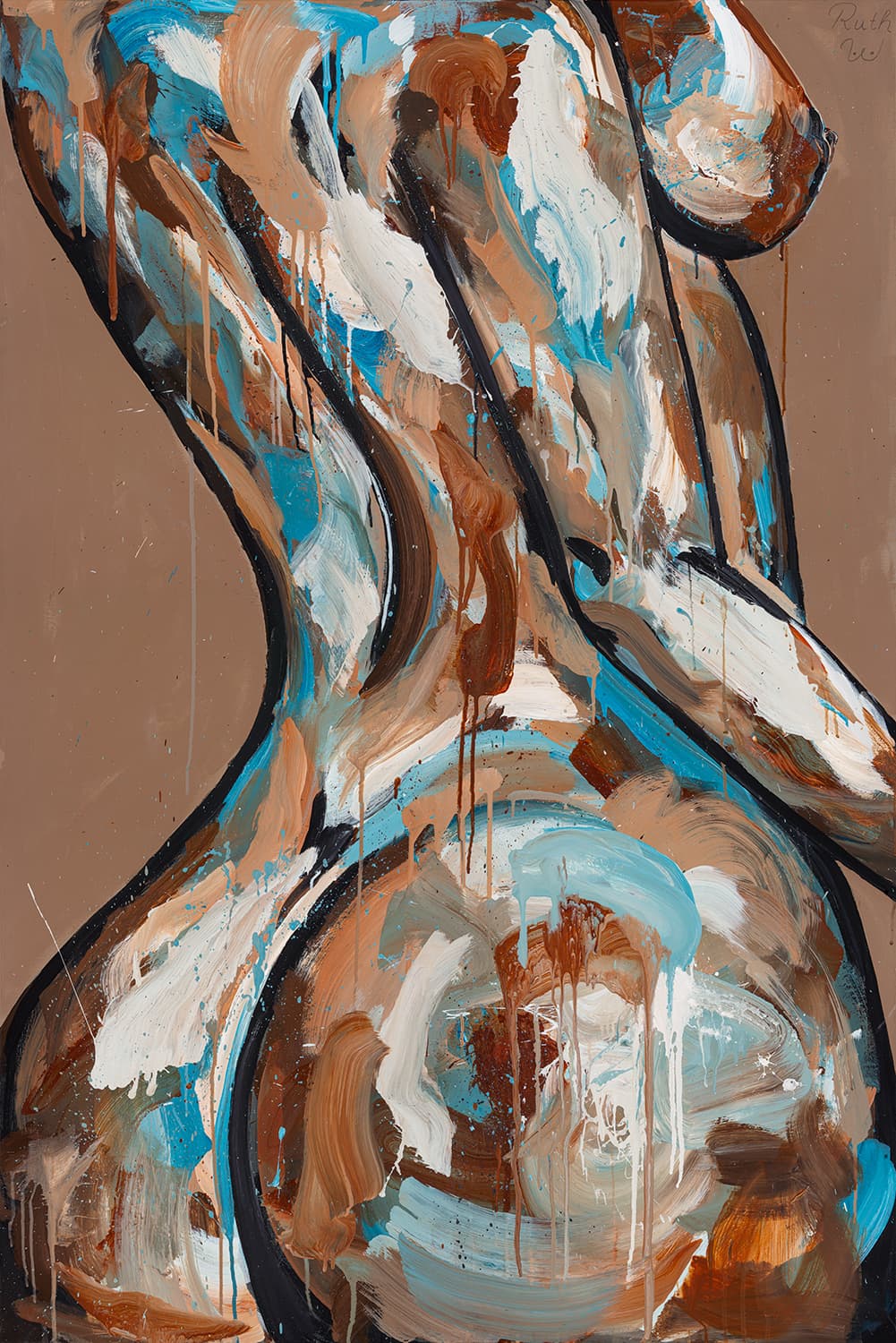


The Body Remembers
The Story Behind the Artwork
This piece explores the biological and psychological experience of women in the moments after intimacy, where the body often tells a different story from the mind. After intimacy, oxytocin and prolactin rise, creating a sense of closeness. When dopamine drops, the nervous system instinctively assesses safety. As trauma researcher Emily Nagoski notes, the body is not concerned with relationship labels, whether you tell it something is exclusive or casual, it simply responds to psychological cues of bonding, safety or threat.
Research from Bessel van der Kolk and Stephen Porges show that the nervous system stores unprocessed experiences and reacts faster than the mind can interpret. This explains why so many women feel a sudden shift into confusion or emotional discomfort after intimacy. The body remembers what the mind may minimise, and it scans for safety until reassurance is felt. If emotional or physical safety is uncertain, the nervous system may interpret closeness as risk rather than comfort.
The uterus has been described as a ‘second brain’ due to its dense neural pathways, can store unresolved experiences. This makes the post intimacy moment especially complex for many women. Understanding this biology is essential, as sometimes we are taught to over ride our instincts in order to appear relaxed, confident or emotionally unaffected.
Visual elements
Her back is turned, creating a curve along the spine, while her arm instinctively shields her stomach, one of the least socially "approved" part of a woman's body. The pose reveals what has been shaped by years of conditioning: the tendency to present parts considered attractive under the male gaze and conceal parts that feel vulnerable or "unacceptable". This composition highlights the internal negotiation between vulnerability and protection. It references the instinctive shielding of areas where safety feels uncertain. The stomach is the part of the body known to store emotion, instinct and shame. During intimate moments women often protect what has been policed or criticised. This pose is an active negotiation of wanting to be desired yet wanting to feel safe. A physical conversation between protection and presentation occurring even when we have no intention of performing at all.
The painting examines how the body arranges itself when navigating discomfort, memory and the desire to feel safe even when no one has asked it to perform. The figure is positioned in a way that reveals the subtle choreography learned over time. These gestures reveal how deeply the male gaze becomes internalised, shaping how women sit, move and even paint themselves. It reflects the familiar moment of shifting one's body in the mirror to appear more flattering because we feel observed.