

Linzi
The Story Behind the Artwork
To be a woman is to be aware of being seen. Many women learn early how their bodies are interpreted and judged, often before the fully understand their own experience (John Berger 1972). Over time, this creates a divide between how a woman feels and how she appears.
When a woman is painted by another woman the gaze shifts from evaluation to recognition (Laura Mulvey 1975). Rather than focusing on how the body appears, attention moves to how it feels to live within it. The figure is met with understanding rather than judgement; she does not need to explain herself or perform.
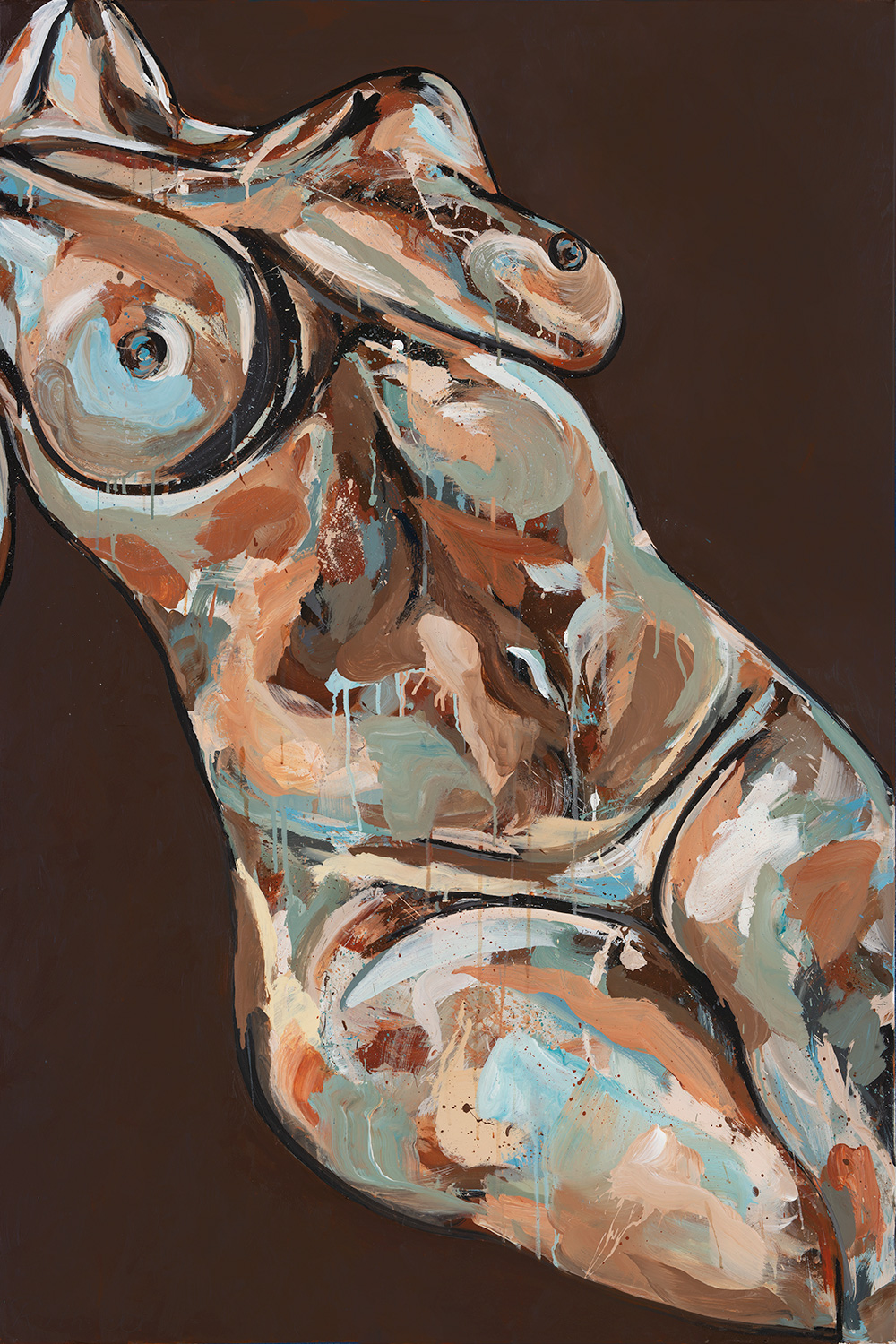
This shift is central to ‘Linzi’. The painting explores what it means to be seen without being reduced. It exists without being interpreted through expectation or desire.
Visual elements
The dark brown background creates a sense of closeness rather than contrast. Its warmth and grounding quality allow the figure to sit within the space rather than stand apart form it, giving the painting an intimate presence.
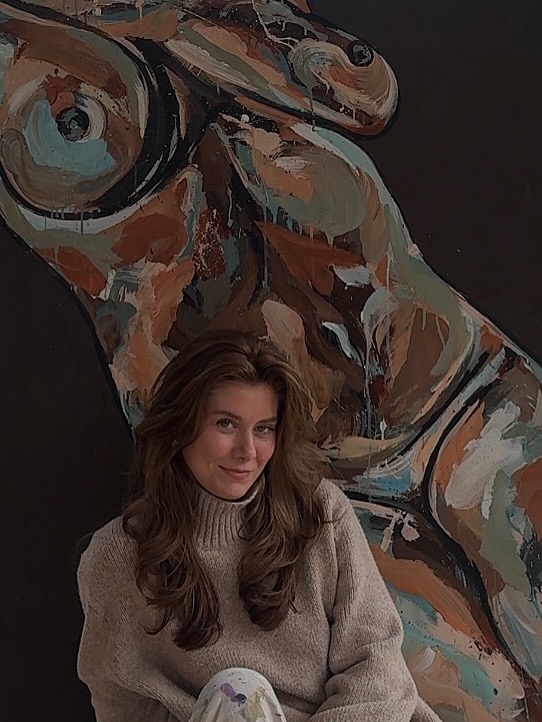
Confidence is communicated through posture: the figure appears self contained and settled suggesting ease rather than display. The painting is intentionally large in scale, opposing the idea that women must take up less space. Instead, the body is allowed to exist fully and unapologetically, refusing to shrink themselves (Marion Young 1980).
Visible paint drips and shifts in texture remain to prioritise process over perfection. They hold the history of the paintings making reflecting the reality that self acceptance is layered.
Meaning and intent
At its core, 'Linzi' is about trust. To allow another woman to paint you is to place your body in hands that understand partly what it means to live as a woman. There is an unspoken agreement that you will not be reduced, corrected or interpreted through someone else's desire.
The painting acknowledges the vulnerability involved in being seen by someone who understands the weight of being looked at. Its intention is not to make a statement about bodies, but to affirm the safety of being held with shared understanding and care.
'Linzi' exists as a record of that trust: a reminder that being seen by another woman can be an act of respect and recognition.