Standing Your Ground In Systems That Were Never Designed For You
The Story Behind the Artwork
This work sits in a wider cultural moment in which women are reclaiming symbols historically tied to masculinity, land and independence. The cowgirl carries layered meanings shaped by race, gender, class and access, revealing how ideas of freedom have never been neutral (Kimberle Crenshaw 1989).
Historical narratives have visually coded the cowboy as a white male despite the significant presence of black cowboys in the American West. This history matters because it reveals how ideas of freedom, movement and autonomy are reinforced by narrow definitions of power and belonging,
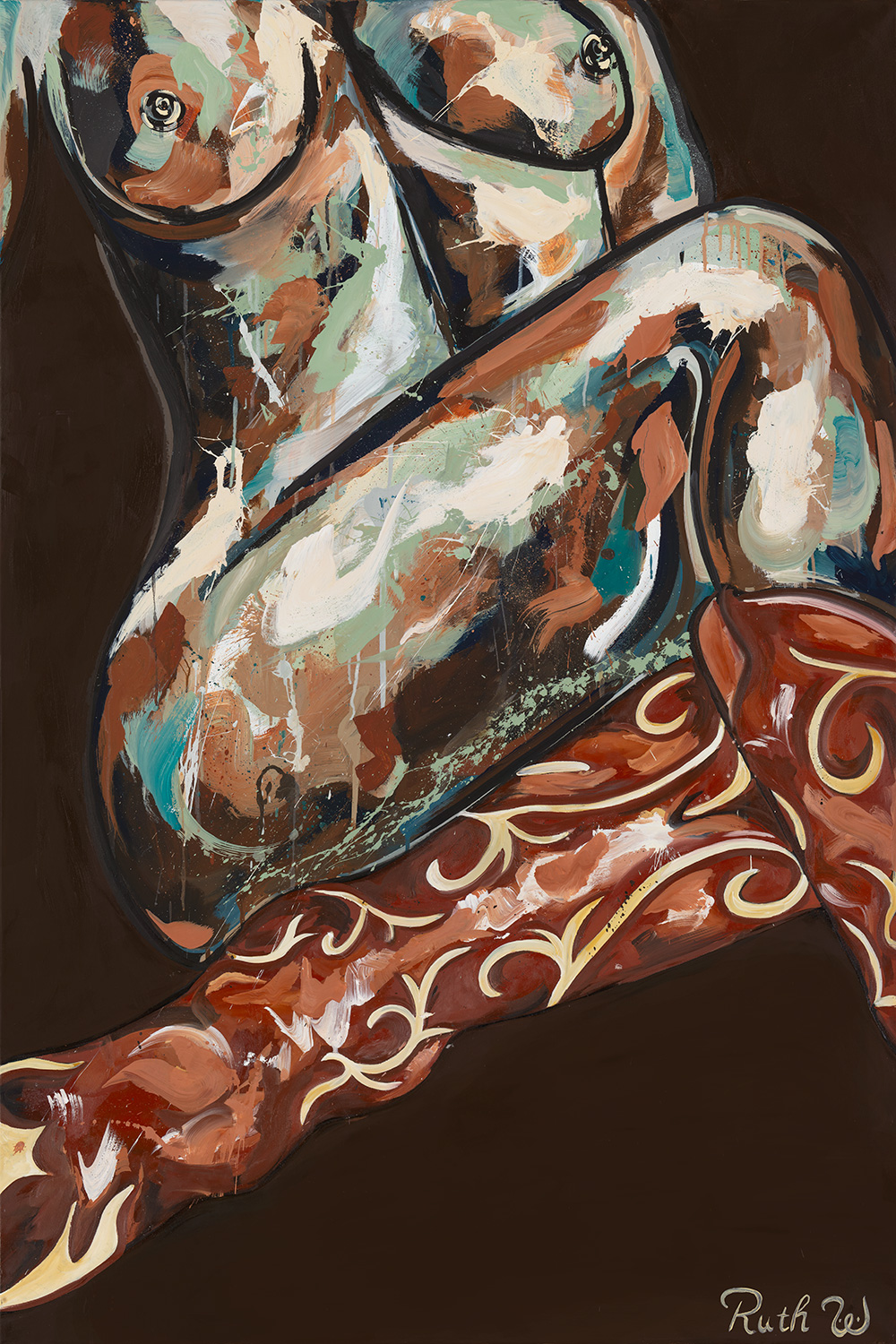
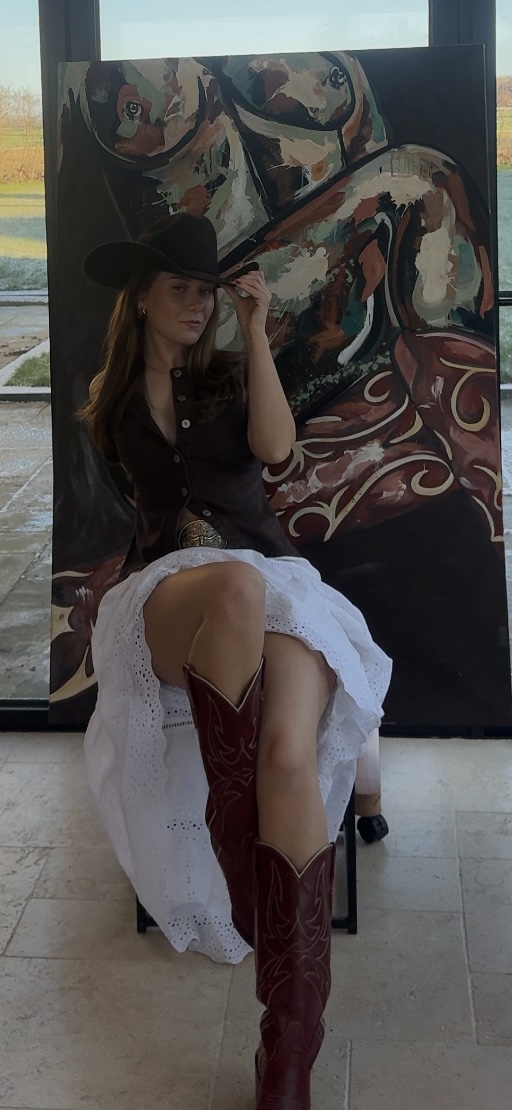
Through an intersectional lens, this painting exists in conversations that challenge those exclusions. The cowgirl here is a figure that is grounded in independence and occupies space, sitting firmly in her body without needing to justify her place.
Visual elements
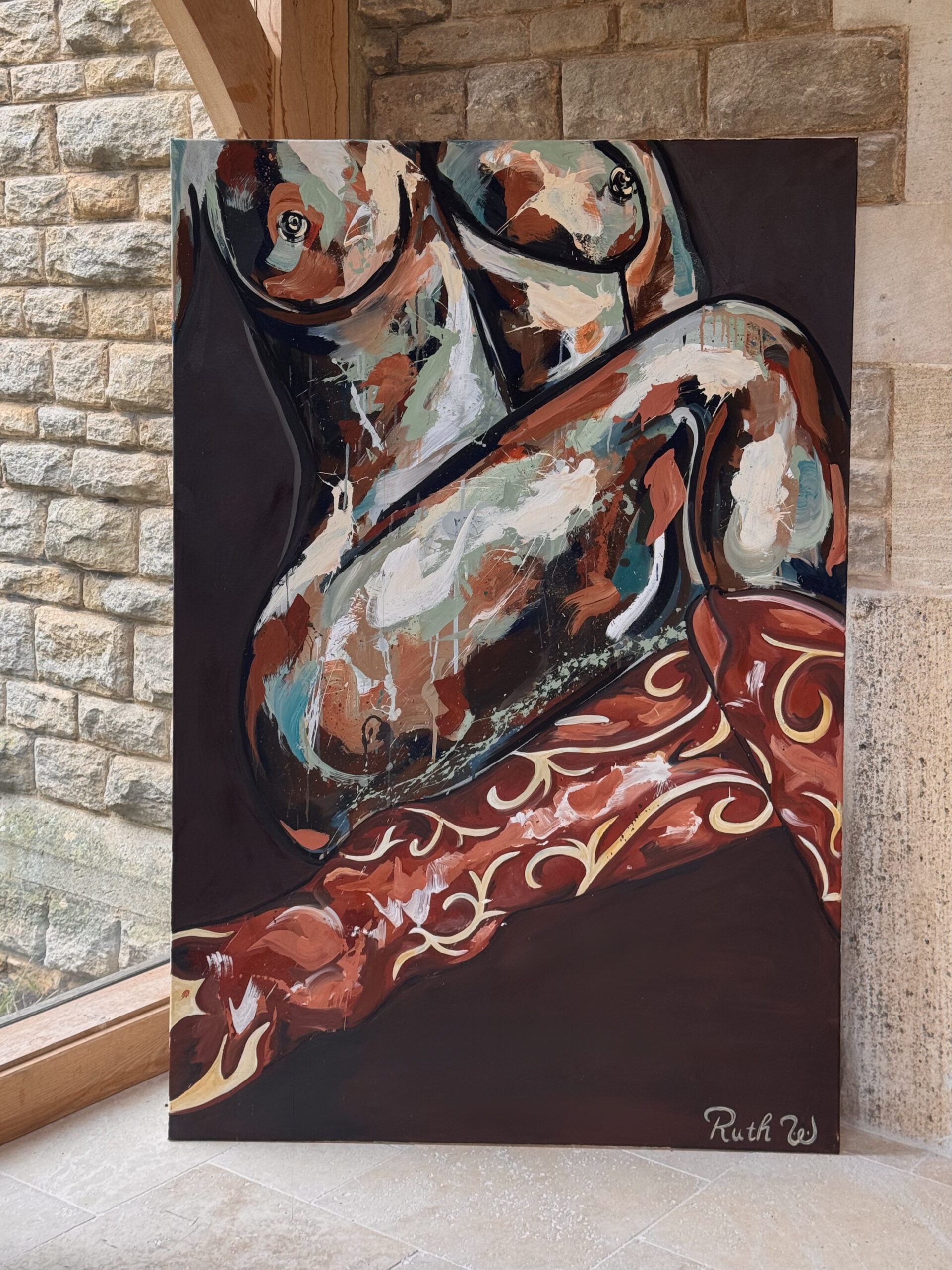
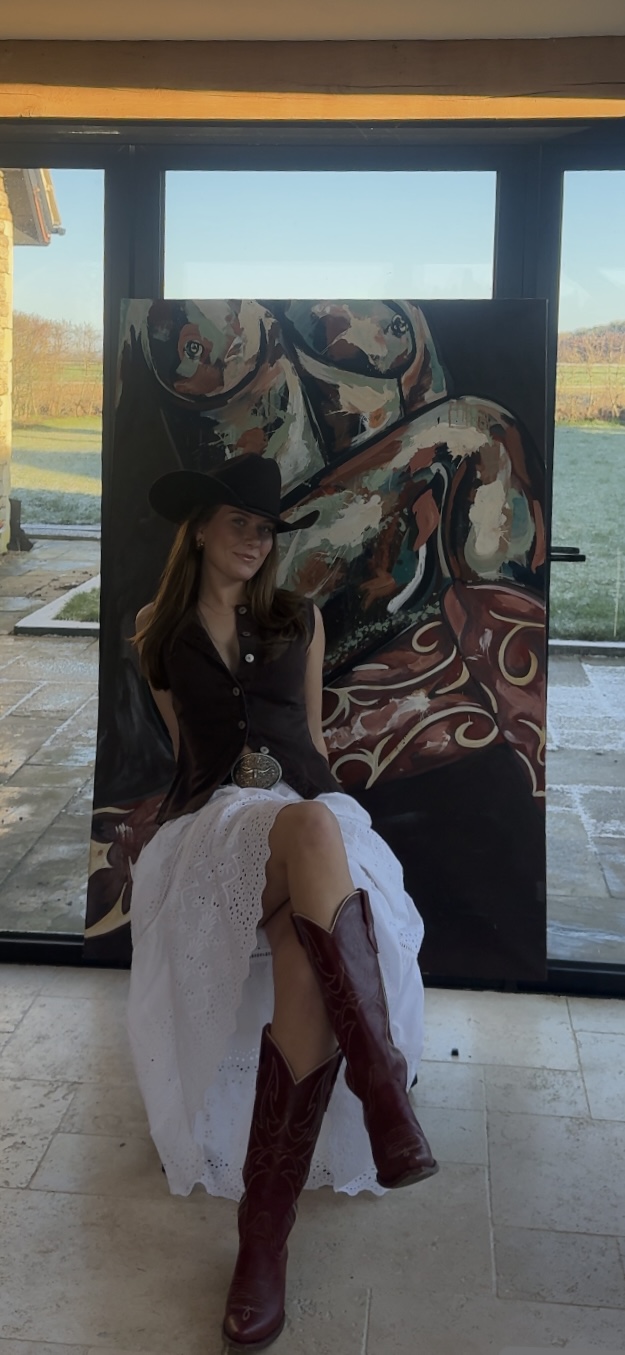
The central visual focus of this piece is the cowboy boot. Historically it is associated with labour, endurance, and freedom of movement. It was designed for function and is a symbol of grounding and autonomy.
Placed on a woman's body, the cowboy boot disrupts the traditional image of the cowboy. Her power is assumed through presence.
The contrast between femininity and the practicality of the cowboy boot is intentional. Where heels have been used to restrict women's bodies, the cowboy boot signifies readiness and the ability to move freely.
Meaning and intent
At its core, this work reflects how freedom is shaped by systems of access and how power and stability have long been seen as masculine traits. By placing cowboy boots on a woman's body it interrupts narratives historically associated with strength and stability.
The figure becomes a symbolic battleground where trauma has been defined by powerlessness (Judith Herman 1992). If movement is power then restriction is control. Representation of standing ones ground creates permission for women to be seen as steady and capable.
Display recommendations
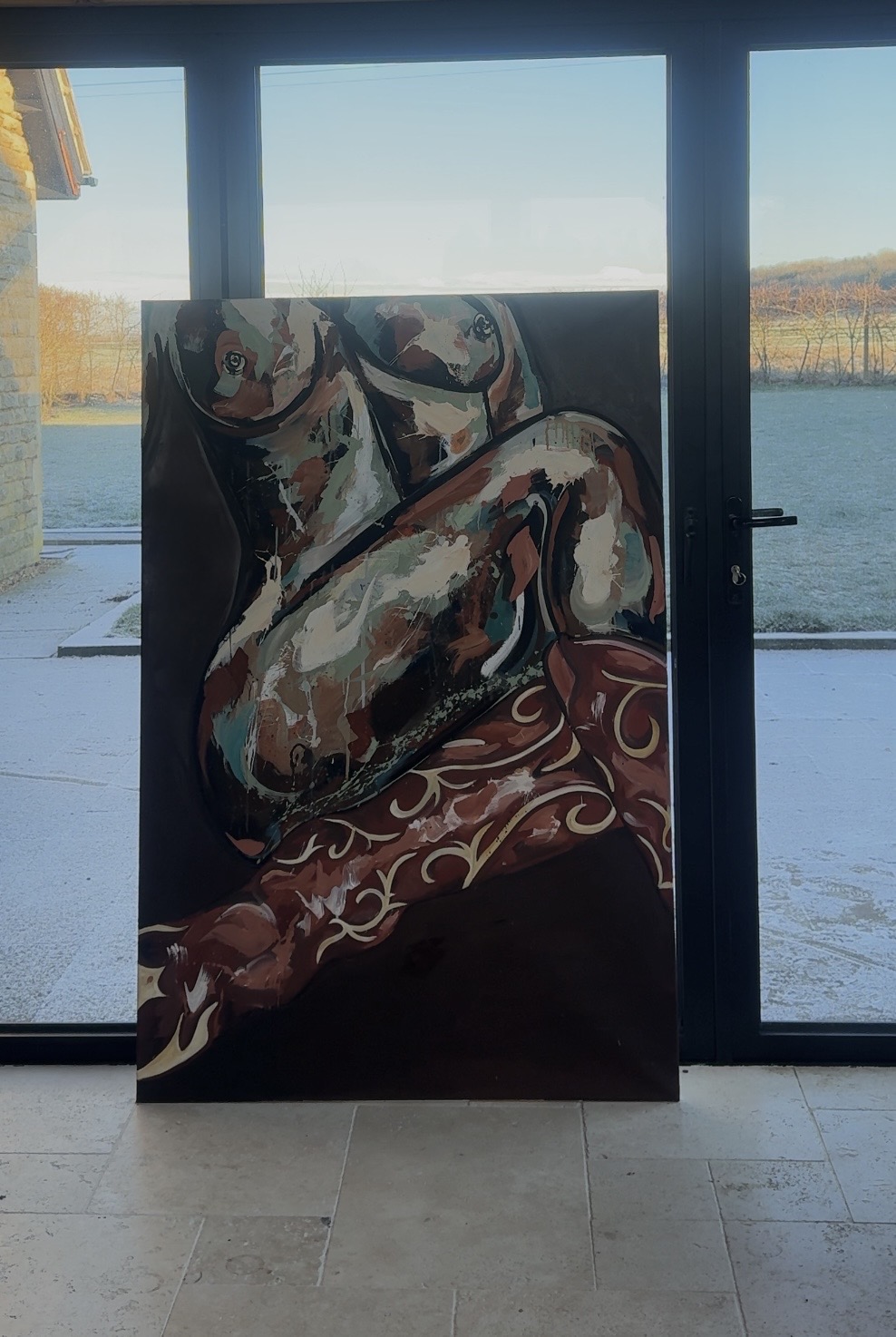
Displayed in your home, 'Out of Range' acts as a reminder of steadiness and self trust. The figure's grounded presence brings a sense of calm to a space, encouraging reflection rather than performance.
It is a piece that recalls the feeling of standing your ground, of being comfortable in who you are and no longer needing to prove your place. It offers a subtle reassurance that presence alone can be enough.
If you feel drawn to the grounding presence and texture of this piece, enquire below to start a conversation about bringing the original artwork into your home.