NUDE
The Story Behind the Artwork
The image originates from a book called ‘NUDE’ by Ralph Gibson, a body of work devoted to his fascination with the female form. Gibson’s photography is rooted in psychology, abstraction, fragments and suggestion. The Body became about shapes, lines, light, shadow and composition.
These images of women are created through a man’s gaze. He spoke about wanting to recreate a sense of intimacy because he believed it contributed into a successful nude. There is an undeniable closeness, admiration and eroticism within his work.
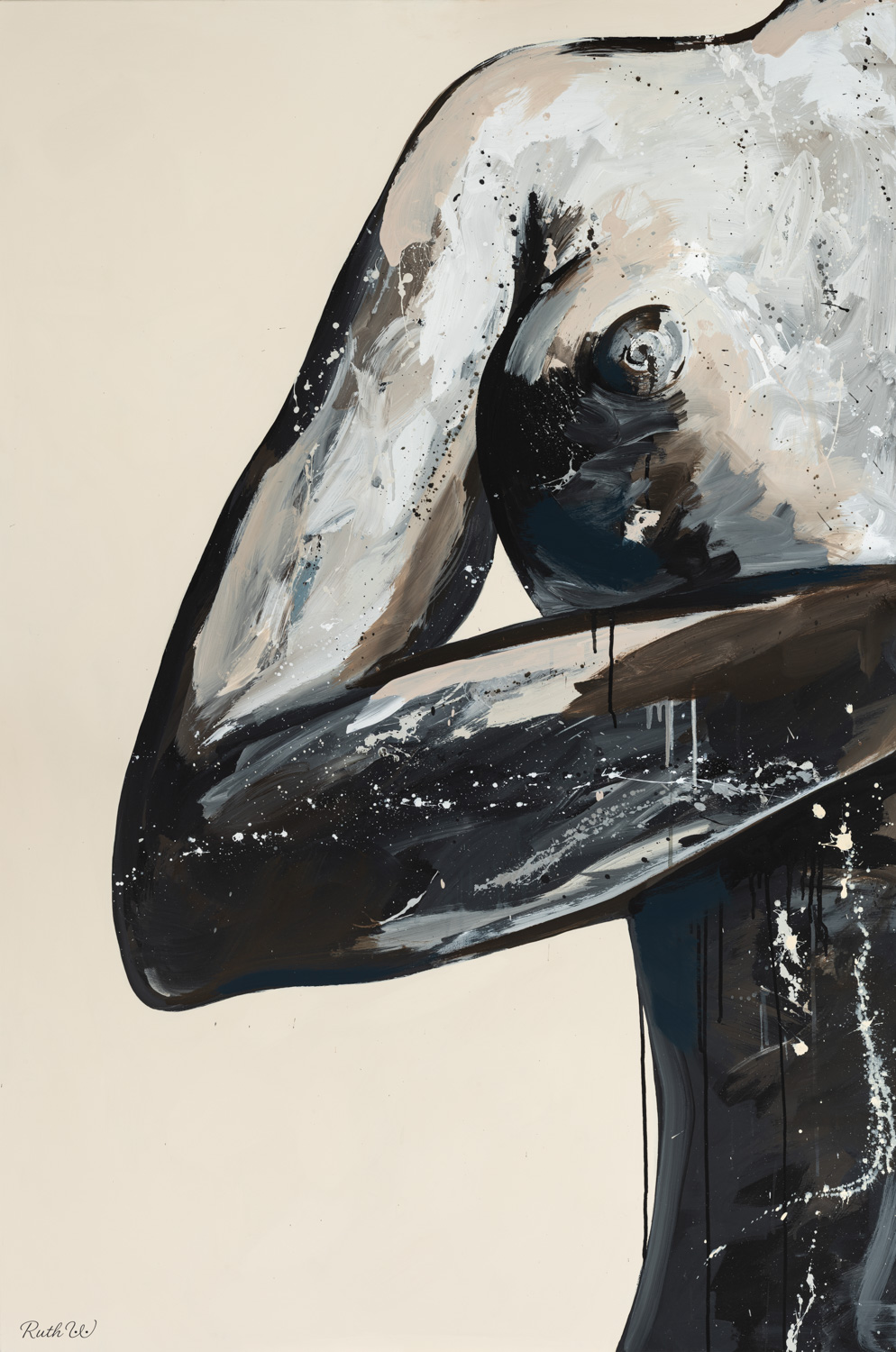
This creates a tension between the photographer’s intention and the experience of the woman within the image. To paint this image was an opportunity to return to an image originally created through a man’s observation and reconsider it from the other side of the lens: to paint a woman’s body while questioning how women’s bodies are looked at, interpreted and understood.
Visual elements
The cropping is fundamental to Gibson's photography. He has explained that when the face of a nude woman is included, the photograph inevitably becomes about a particular individual. The woman here is not presented as a complete person. The crop complicates it further because her face has been removed we cannot confidently assign an emotion to her. We do not know whether she feels powerful or vulnerable.
She is actively altering her appearance by pushing her breast upwards, emphasising its curve and deliberately participating in the construction of the image. This gesture introduces agency and reminds us that the body belongs to her. There is a contradiction within the gesture: she is presenting herself to the gaze while retaining physical ownership over what is being presented.
Meaning and intent
Women are frequently understood through fragments. A body can become an assumption about confidence. A pose can become about availability. The amount of skin shown can become about intention. You can see her body without knowing her. Her sexuality does not tell us everything about her. Her willingness to be looked at does not give us permission to decide what she wants. Exposure does not automatically mean availability.
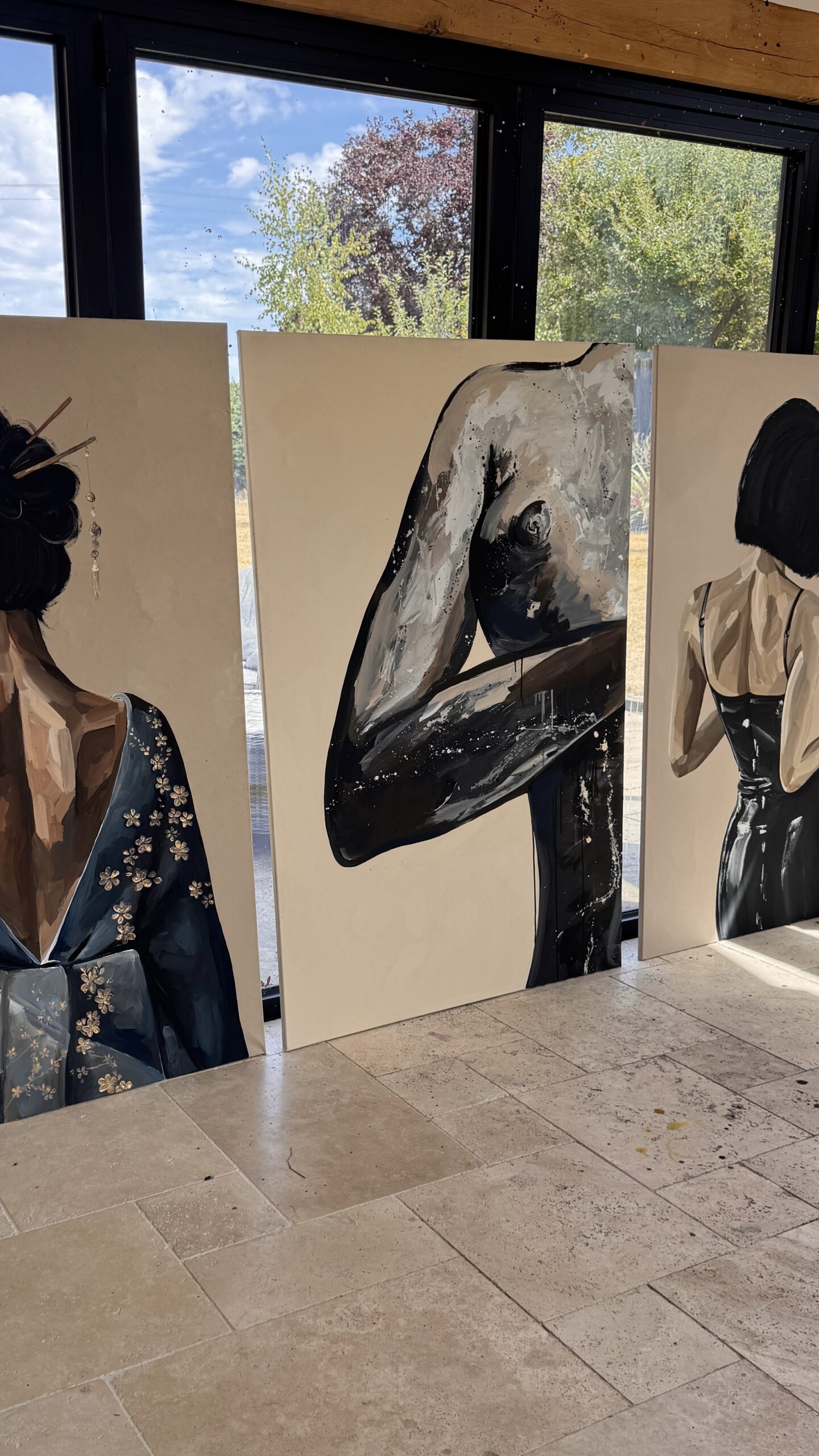
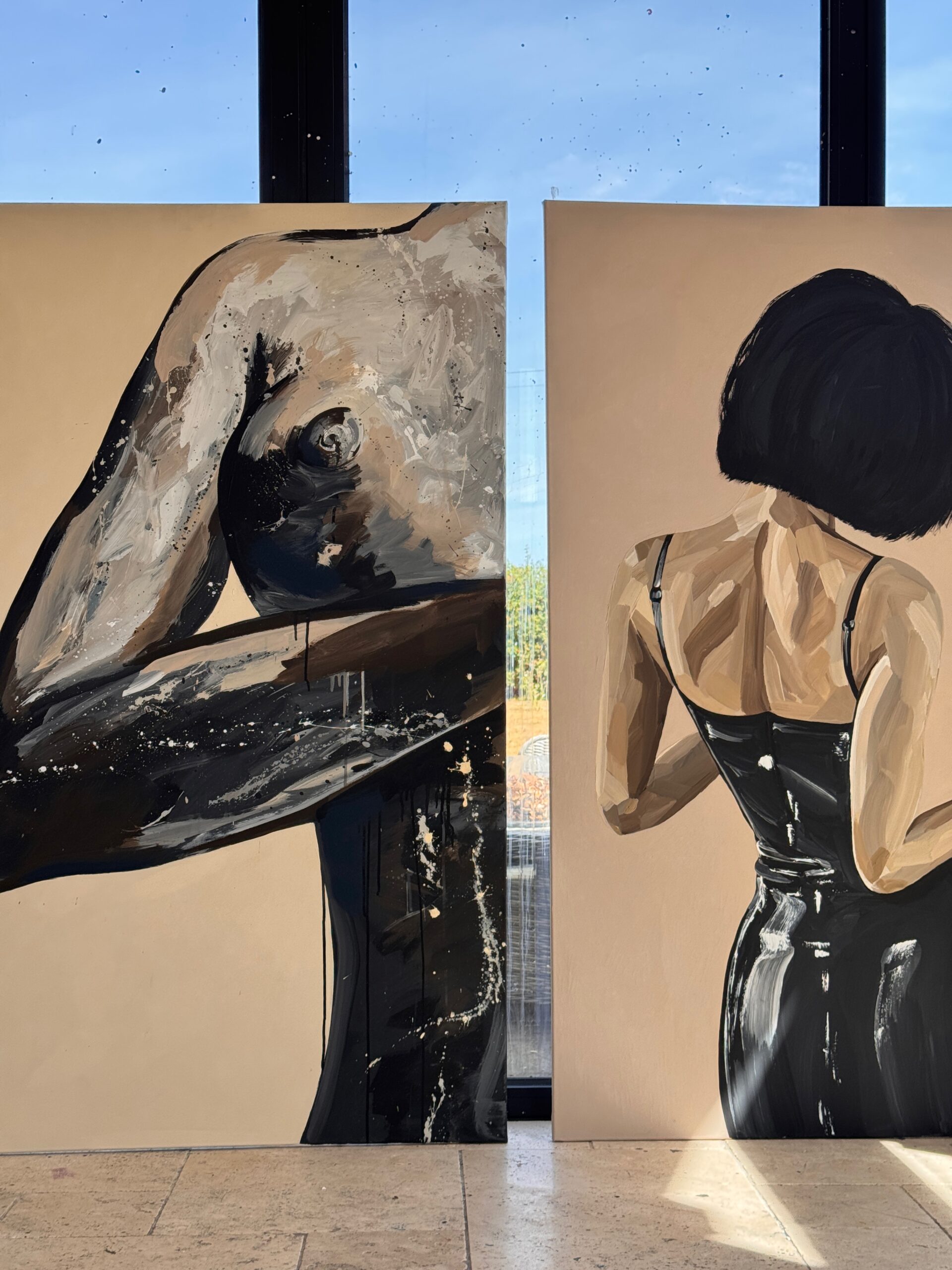
By translating Gibson's photograph into a painting, the work introduces a shift in perspective. An image of a woman's body originally constructed through the male gaze is being reconsidered through the hand of a female painter.
The painting asks where admiration ends and ownership begins. It questions whether a woman can knowingly invite the gaze while retaining complete authority over what that gaze is allowed to mean.